Innovative energy solutions for Alabama
Tenaska is excited to expand our development efforts in Mobile County. We are adding a natural gas-fueled power plant to our plans for the Longleaf project. This expansion is driven by growing need for reliable power, economic growth in South Alabama and the positive reception of our proposed carbon capture and storage (CCS) project.
We’ve always considered our CCS project to be an enabler – as an emissions solution for existing industry and as an attractor for new business investment. Tenaska’s robust development experience allows us to propel this concept and meet a growing need for new sources of reliable power generation.
Longleaf Energy Hub
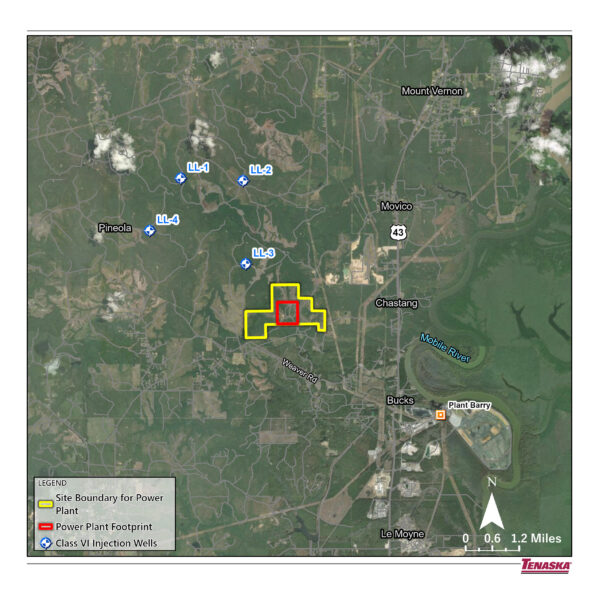
Tenaska has been active in Mobile County since 2022, promoting carbon capture and storage (CCS) as a management solution for carbon dioxide (CO2) emissions while also compensating landowners for subsurface rights. An application has been submitted to the U.S. Environmental Agency for four CO2 injection wells across our project footprint near Bucks.
Announced in 2026, the proposed natural gas-fueled power plant will be located within the CCS project footprint. As currently envisioned, the combined-cycle facility would be able to produce up to 750 megawatts of reliable power.
Tenaska maintains the flexibility to fully integrate the power plant and the CCS hub, or to advance these independently.
Project technology
Want to learn more about the power plant and CCS components of this project? More information is available here.
Power generation
CCS
Project timeline

A thorough permitting process
There are many local, state and federal permits needed for the Longleaf Energy Hub to come to fruition.
For the natural gas plant, the Alabama Department of Environmental Management and the Alabama Department of Economic and Community Affairs’ Office of Water Resources will need to issue air and water permits. Ongoing monitoring and compliance will ensure the facility meets established standards intended to protect human health and the environment.
CCS injection wells are rigorously permitted by the U.S. Environmental Protection Agency (EPA) and the Oil and Gas Board of Alabama, which also governs the siting, operation, testing and long-term maintenance of the wells.
Of note, the EPA will need to issue a Class VI permit – its most stringent well permit – for the CCS wells. As part of that process, the EPA conducts a detailed technical and environmental review to ensure the proposed well sites meet all requirements for the safe, long-term storage of carbon dioxide. The EPA will first issue a permit to construct the project, then we will need to further demonstrate the built project is sound before receiving a permit to operate.
Other permits will cover wildlife, stormwater, pipeline routing and more.
Focus on safety
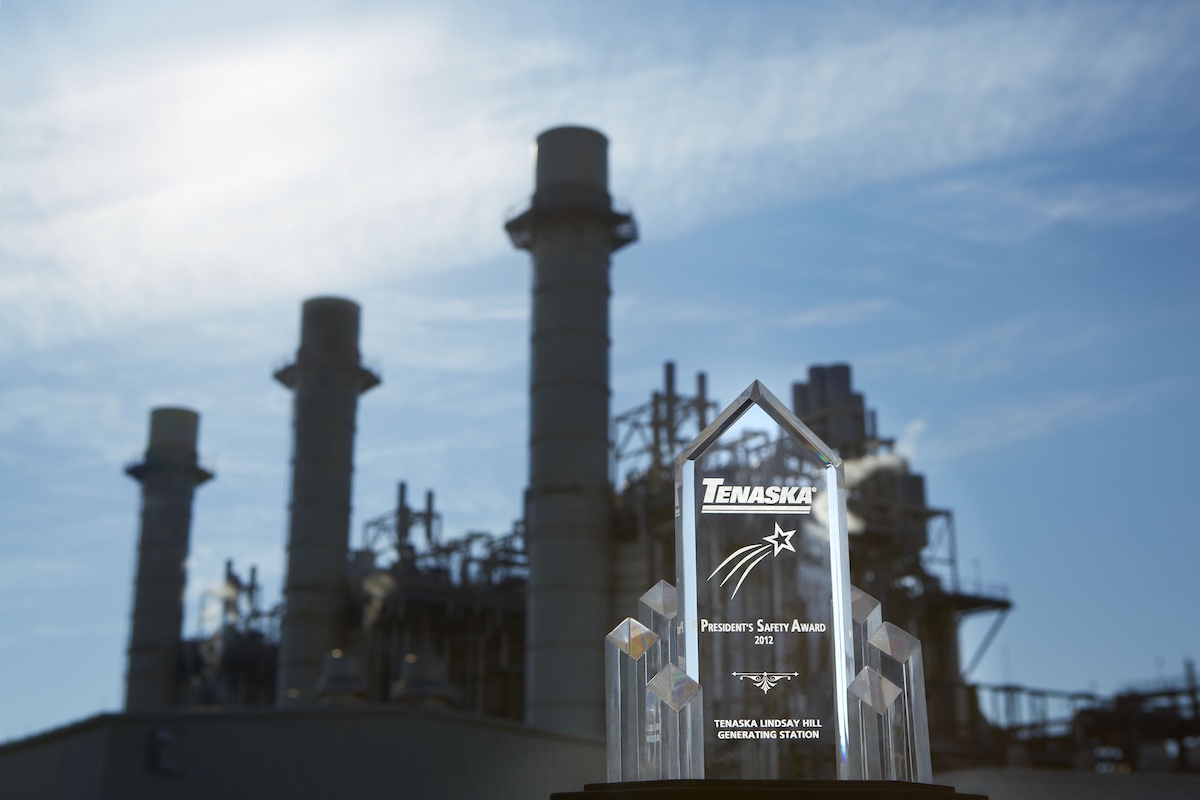
Safety is a top priority at Tenaska. We work hard to design facilities that are protective of employees, residents and the environment. This has been demonstrated through the safe operation of the entire Tenaska fleet. We have received numerous accolades from the U.S. Occupational Safety and Health Administration and the National Safety Council.
Our facilities – many of which are natural gas-fueled power plants – comply with all applicable state and federal regulations.
In addition, CCS is a safe, environmentally responsible solution to managing CO2 emissions. CO2 is odorless, colorless and incombustible, which means it can safely be transferred through pipelines to injection wells into geologically secure storage areas. Injection wells are rigorously permitted, with strict standards for the siting, operation, testing and long-term maintenance of the wells.
Project updates
Visit our news page to read the latest updates about the Longleaf Energy Hub.